


Bennett Prize in OpenPrescribing - Joint Clinical Winner (Dr Miles)
- Posted:
- Written by:
- Categories:
This article is part of a series: Bennett Prize in OpenPrescribing Winner Blogs
- Bennett Prize in OpenPrescribing - Joint Clinical Winner (Dr Miles)
About the Bennett Prize in OpenPrescribing
The Bennett Prize in OpenPrescribing celebrates the creative, impactful, and real-world ways people use OpenPrescribing data and tools.
We received entries from clinicians, pharmacists, researchers, analysts, and students, showcasing everything from quality improvement projects to academic research and innovative data analysis.
Over the coming weeks, we will be publishing a series of guest blogs written by each of the 2025 Bennett Prize winners, sharing their work in their own words.
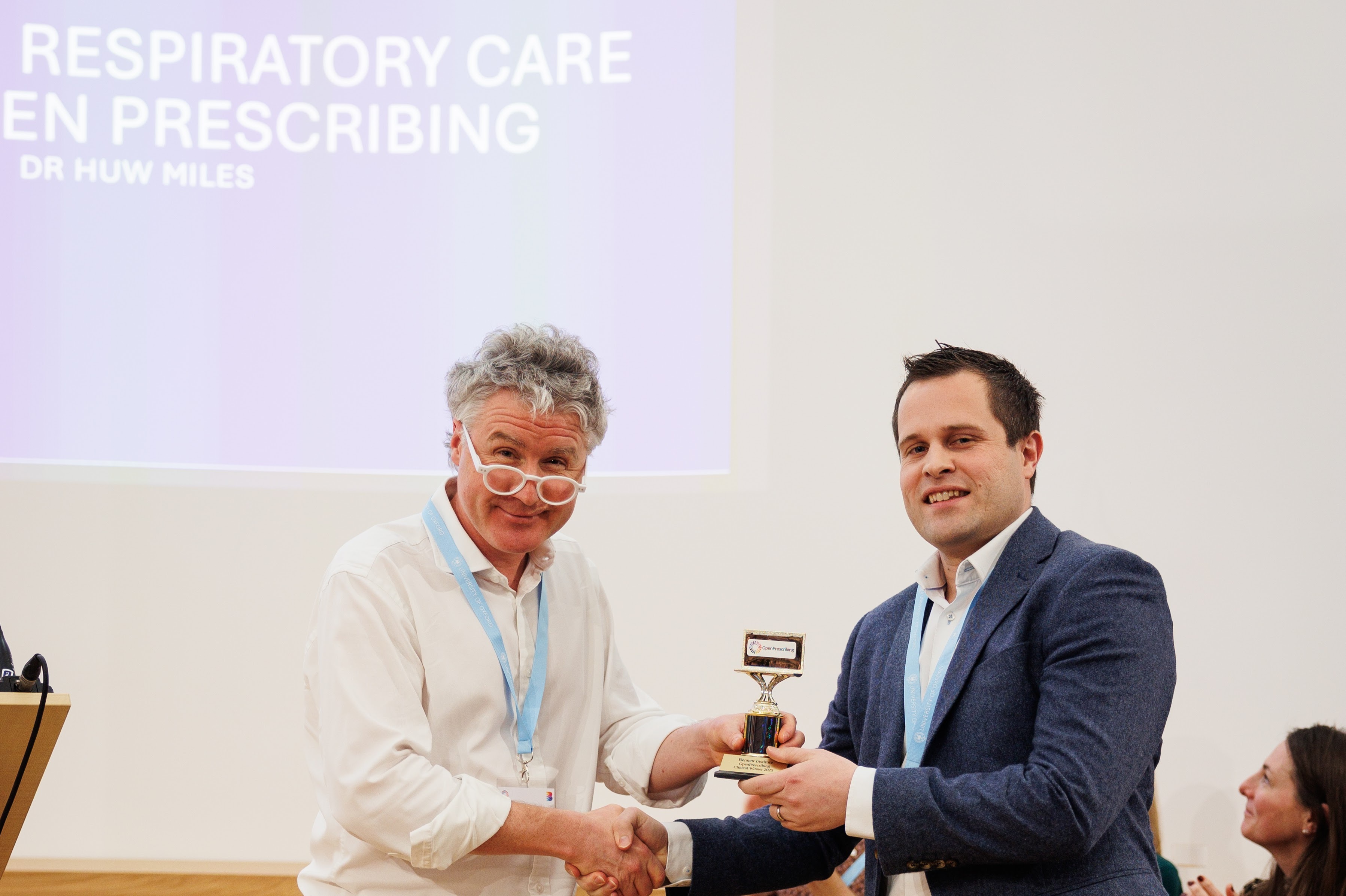
This post below was written by Dr Huw Miles, a GP partner and joint clinical winner of the inaugural Bennett Prize in OpenPrescribing.
Improving Respiratory Care with OpenPrescribing
By Dr Huw Miles
I first became aware of OpenPrescribing through my work as a quality improvement facilitator with the RCGPs Primary Care Development team. Having led improvement initiatives as a GP partner in my own practice for several years I couldn’t believe that I’d never come across OpenPrescribing before. Here was a tool built on a user-friendly platform, providing insightful feedback on prescribing at a practice level.
As I incorporated this tool into my work with GP teams it was fascinating to see how practices’ perceptions of their prescribing profile compared with reality, as displayed indisputably by nearly a hundred different prescribing measures. Mismatches were common!
While the data may be hard to argue with the interpretation is a more complex matter. There may be very legitimate reasons why, for example, a practice is a higher-than-average prescriber of opiate medication. But most practices know their populations well and can, through cross-reference with other data sources such as disease prevalence and practice demographic profiles, draw clear conclusions about their prescribing habits.
It wasn’t long before I was making use of the tool within my own practice. Having already implemented a template for annual clinical reports, OpenPrescribing was a natural addition, enabling us to keep a finger on the pulse of our prescribing and set annual prescribing goals.
At our 2024 partners’ away day I highlighted that we were outliers in SABA prescribing with a level of prescribing significantly over and above what could be expected, considering our practice population. Our excellent asthma and COPD QOF achievement belied what the prescribing data highlighted.

We agreed that our lead GP partner for asthma and COPD would work with our asthma nurse and prescribing team to diagnose the root cause of this variance in SABA prescribing. They identified an overly reactive approach to reviewing inhalers, a need for upskilling of the wider GP team and poor local access to spirometry as contributing factors. We also discussed how we could better share the workload as a team, moving away from an overreliance on one member of staff.
A new protocol was implemented, making wider use of the multidisciplinary team, enhancing the uptake of MART regimes and providing a clear escalation plan for our prescriptions and pharmacy teams. Additionally, refresher training on asthma and COPD was provided for clinical staff.
The results speak for themselves.

For me, the cherry on the cake was the satisfaction of presenting these graphs at our annual celebratory team event. My partners and I are always looking for opportunities to recognise the successes of our team and visual evidence of success is a powerful motivator for further improvement.
Quality improvement in healthcare can be viewed as a complex and daunting task, but the work of our team was in essence simple – a ‘Plan, Do, Study, Act’ cycle of improvement using high-quality, accessible data readily available on OpenPrescribing. This invaluable resource has enabled us to demonstrate that we have improved SABA prescribing, and will enable us to quickly identify any need for further change in future.
Live, high-quality, comparative data is hard to come by in general practice, with some national datasets only able to benchmark data more than 12 months old. GP teams should make the most of OpenPrescribing; we will certainly continue to do so, our focus this year being on broad-spectrum antimicrobial prescribing.